Why Choose BPT After Class 12? Career Scope and Opportunities
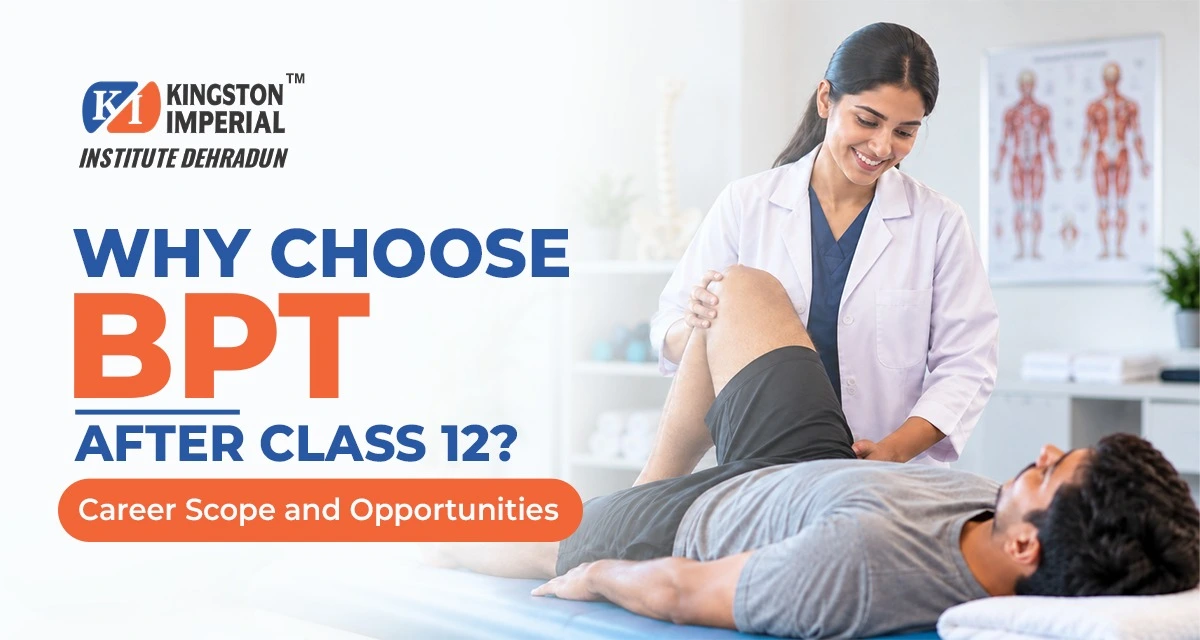
Right after boards, a lot of science students find themselves stuck between the usual options — MBBS, engineering, maybe pharmacy — without really knowing there’s a solid, less crowded path sitting right next to them. Physiotherapy is one of those fields that quietly keeps growing every year, mostly because people are far more aware of fitness, injury recovery and post-surgery rehab than they used to be.
A BPT course after 12th is a good choice for science students because it’s a hands-on, patient-facing healthcare career with steady demand, no need for NEET at most colleges and multiple paths — hospitals, sports teams, rehab centres or even your own clinic — once you graduate.
Why BPT Actually Makes Sense After Class 12
Physiotherapy isn’t a backup option anymore — for a lot of students, it’s genuinely the first choice and for fairly practical reasons.
- No surgery, no long OT hours. If you like healthcare but the idea of an operating theatre doesn’t appeal to you, physiotherapy lets you work directly with patients through exercise, movement and manual therapy instead.
- Steady, growing demand. More people are dealing with sports injuries, post-surgery recovery and lifestyle-related joint or back problems and all of that needs trained physiotherapists.
- You don’t always need NEET. Most colleges offering the BPT course admit students based on merit or their own entrance test so it’s a realistic option even if NEET isn’t part of your plan.
- Multiple career directions from one degree. You’re not locked into hospital work alone — sports teams, rehab centres, schools, government health departments and private practice are all on the table.
- A career built on daily human connection. If you actually enjoy helping someone regain movement or get out of pain, that satisfaction is hard to get from a purely lab-based or desk-based job.
Eligibility for the BPT Course After 12th
Before locking in this path, it helps to know exactly where you stand eligibility-wise. For most colleges offering a BPT course after 12th, the requirements come down to a fairly short list:
- Completion of 10+2 from a recognised board with Physics, Chemistry and Biology as core subjects
- A minimum of 50% aggregate marks in the qualifying exam
- Some colleges may conduct their own entrance exam, while others admit purely on merit
- A genuine interest in patient care and physical fitness, since the course is heavily practical
What the Course Curriculum Actually Involves
A BPT programme typically runs for 4.5 years — 4 years of academic study followed by a 6-month mandatory internship. The internship part matters more than students usually expect because it’s where classroom learning about anatomy, physiology and exercise therapy turns into actual clinical skill.
Core areas covered through the programme include exercise therapy, orthopedics, general science and radiology, along with subjects like biomechanics, pharmacology, electrotherapy and clinical orthopaedics as you move through the semesters. By the time the internship comes around, students are expected to diagnose movement-related problems and apply the right physiotherapy techniques under supervision — not just recognise them on paper.
Career Scope After BPT
This is usually the part that convinces students — the range of places a BPT graduate can actually work.
- Hospitals and multispecialty clinics, working alongside doctors on patient recovery
- Sports organisations and fitness centres, helping athletes prevent and recover from injuries
- Rehabilitation centres, supporting long-term recovery for patients with mobility challenges
- Private practice, either running your own clinic or offering home-care physiotherapy services
- Teaching roles in colleges, for graduates who go on to pursue further studies or specialisation
The field also stays fairly recession-proof compared to a lot of other career choices, simply because physiotherapy needs don’t really go away — they tend to increase as awareness around fitness, ageing and injury recovery keeps growing.
Comparing BPT With Other Physiotherapy Courses After 12th
Physiotherapy courses after 12th aren’t limited to just the bachelor’s route, though BPT remains the most complete and widely recognised option among them. A full BPT degree gives you broader clinical exposure and a longer internship compared to shorter certificate-level programmes which mostly cover the basics without the same depth of hospital training.
If your goal is a genuine, long-term career in physiotherapy rather than just an entry-level assisting role, the 4.5-year BPT route tends to open more doors down the line, especially if you plan to specialise later through an MPT.
If you’re still weighing this decision, our earlier post on Is BPT a Good Career Choice After 12th goes deeper into salary expectations, government job options and the different specialisations you can pursue after the degree — worth reading if you want the fuller picture before deciding.
How KIIMS Supports Students Through This
KIIMS Dehradun runs its BPT programme with a mix of classroom teaching and genuinely hands-on clinical exposure which matters a lot in a field where practical skill is everything. The campus includes well-equipped labs built specifically for BPT training, along with a faculty team focused on physiotherapy teaching rather than general science instruction. There are also strong industry ties with healthcare providers which feed directly into the internship placements students need to complete before graduating.
Beyond academics, the campus itself is built to support students living away from home — a 24/7 infirmary and wellness facility, Wi-Fi access, a full library, advanced labs, round-the-clock security, sports facilities, hostel accommodation for both boys and girls and an on-campus ambulance service for emergencies. None of this replaces the actual physiotherapy training but it does mean students aren’t juggling basic logistics while trying to focus on a fairly demanding, practical course.
Conclusion
Choosing a BPT course after 12th really comes down to wanting a hands-on, people-facing healthcare career without committing to years of surgical training — one that opens into hospitals, sports teams, rehab centres and private practice with government job options and further specialisation available down the line for those who want to go further.
This is exactly the space KIIMS (Kingston Imperial Institute of Medical Sciences) has built its BPT programme around. Recognised as one of the best BPT college in Dehradun, KIIMS pairs a structured 4.5-year curriculum — covering exercise therapy, orthopedics, general science and radiology — with real clinical exposure through its industry-linked internships and hospital connections. Add in supportive campus infrastructure, from advanced labs to hostel and library facilities and it becomes a fairly complete setup for students who are serious about starting a genuine, long-term career in physiotherapy rather than just picking up a degree for the sake of it.